The right of brothers and sisters to grow up together enshrined in law
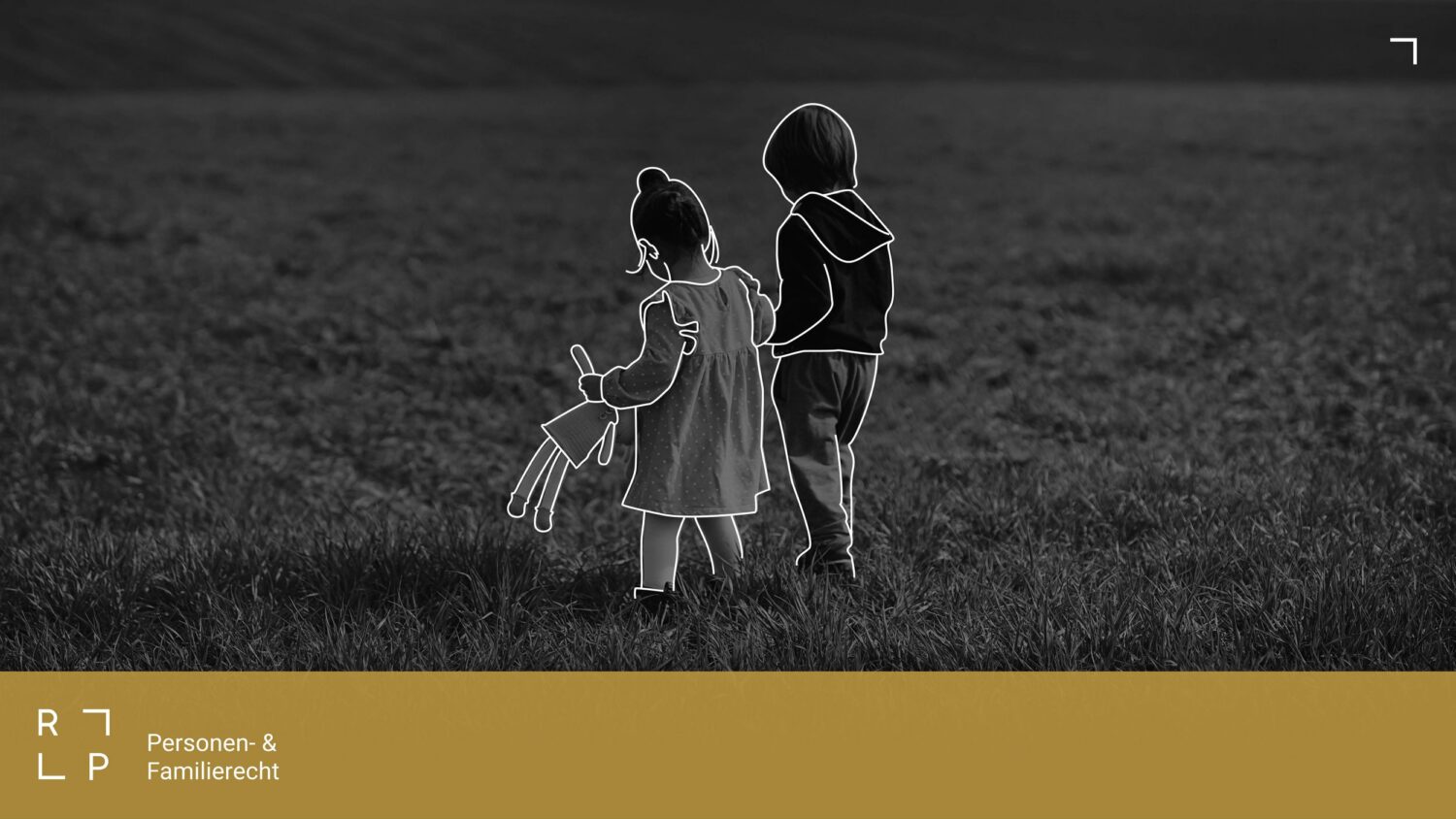
When children’s familiar world is suddenly turned upside down, for example by their parents’ separation or the start of a youth care process, the presence of brothers and sisters often remains the only familiar anchor. Although many consider it self-evident that brothers and sisters should still be able to grow up together after such a drastic change, it took considerable effort before that principle was actually enshrined in law. The Act of 20 May 2021 (B.S. 19 June 2021) grants recognition, 20 years after the first legislative proposal, to that unique bond between brothers and sisters.
The origin of the Act of 20 May 2021
The Belgian legislature undoubtedly drew inspiration for explicitly including the right of brothers and sisters to grow up together in the law from the French Code Civil, in which this principle has been laid down since 1997. Given that the number of divorces, blended families and children involved in youth care has been steadily increasing year after year, it could no longer be denied that there was an urgent need for a right safeguarding that special relationship between brothers and sisters. As early as 2001, an initial legislative proposal to that effect was formulated, but it ultimately took another 20 years before it finally became law—after several amendments and with the support of various campaigns by children’s rights organisations. A new Chapter III, ‘Brothers and Sisters’, was thus added to the former Civil Code, setting out the legal principles concerning the right of brothers and sisters to grow up together.
The scope of the Act of 20 May 2021
The definition of brothers and sisters, more than a blood tie
The law does not limit brothers and sisters to a blood relationship, but also equates children who are raised together within the same family and who have thereby developed a special emotional bond with one another. As a result, children without any legal or blood relationship, such as a stepbrother or stepsister, also have the right to maintain personal contact with each other after, for example, the breakup of their respective parents’ relationship, provided they have built up a special emotional bond. Two cumulative conditions must therefore be met: 1) the children must have grown up together = ‘the upbringing criterion’ and 2) these children must have developed a special emotional bond with each other = ‘the affectivity criterion’.
The role of the right to grow up together in residence and contact arrangements
The right of brothers and sisters to grow up together plays an important role in the context of organizing residence and contact arrangements after a parental relationship breakdown, as well as when a minor child is placed out of home as a result of youth protection measures. Thus, in the event of a dispute between parents regarding the residence or contact arrangement, the family court must henceforth seek to pursue the same arrangement for all brothers and sisters in that family. If that should not be possible for a specific reason, the family court must expressly clarify how the children can nevertheless maintain personal contact with each other. In the case of an out-of-home placement, the law in turn ensures that brothers and sisters are, in principle, placed in the same youth care institution or the same foster family. If placement in the same youth care institution or the same foster family is, for whatever reason, not feasible, the brothers and sisters at the very least have the right to maintain personal contact with each other for the duration of the measure taken.
What if maintaining the relationship is not in the child’s best interests?
The exercise of the right not to be separated from one another or to maintain personal contact may be refused if it is established that this would not be in the child’s best interests. One must not be blind to family situations in which behavioural disorders, communication problems, and abuse may be present. It is not uncommon for children placed in a youth care facility to need to be separated (whether temporarily or not) from a brother or sister who is struggling with behavioural issues that affect that child’s development. It must, however, be expressly emphasized that the above situation does not mean that the right to grow up together with any other brothers or sisters with whom no such problem exists also lapses.
It is therefore always for the family or juvenile court judge to assess in concrete terms what the children’s interests are and whether their fundamental right to grow up together is compatible with those interests, whereby the minor’s right to be heard – which was already discussed earlier this month in a previous contribution – is, among other things, of crucial importance in making that assessment.
Exceptions to the right not to be separated from one another and to maintain personal contact
The Act of 20 May 2021 provides for an explicit exception to the right to grow up together for children placed in a youth facility as a result of committing a juvenile offence. After all, such a measure is not taken solely in the interest of the child, but also serves at the same time to protect society as a whole. This also immediately constitutes the justification, since it is obviously not logical for the brother or sister of the person who committed a juvenile offence to be placed in the youth facility as well when he or she has not engaged in any criminal behaviour. However, it should be emphasized that in such a situation, the right to personal contact between brothers and sisters still applies, and in that case the placed child can enjoy visitation rights with his or her brother or sister.
Conclusion: a partly symbolic codification, but one with a crucial message
It may be argued that the Act of 20 May 2021 has merely symbolic significance, since even before the introduction of this Act, the courts could already allow brothers and sisters to grow up together on the basis of the well-known criterion that deciding otherwise would be contrary to the interests of the child. This Act therefore merely introduces an additional criterion that strongly underscores the special nature of the relationship between brothers and sisters and the special protection this bond deserves at all times.
Reyns Advocaten has extensive expertise in both family law and juvenile law, and you can therefore always turn to us with all your questions and concerns regarding, among other things, the residence arrangements for your children.